
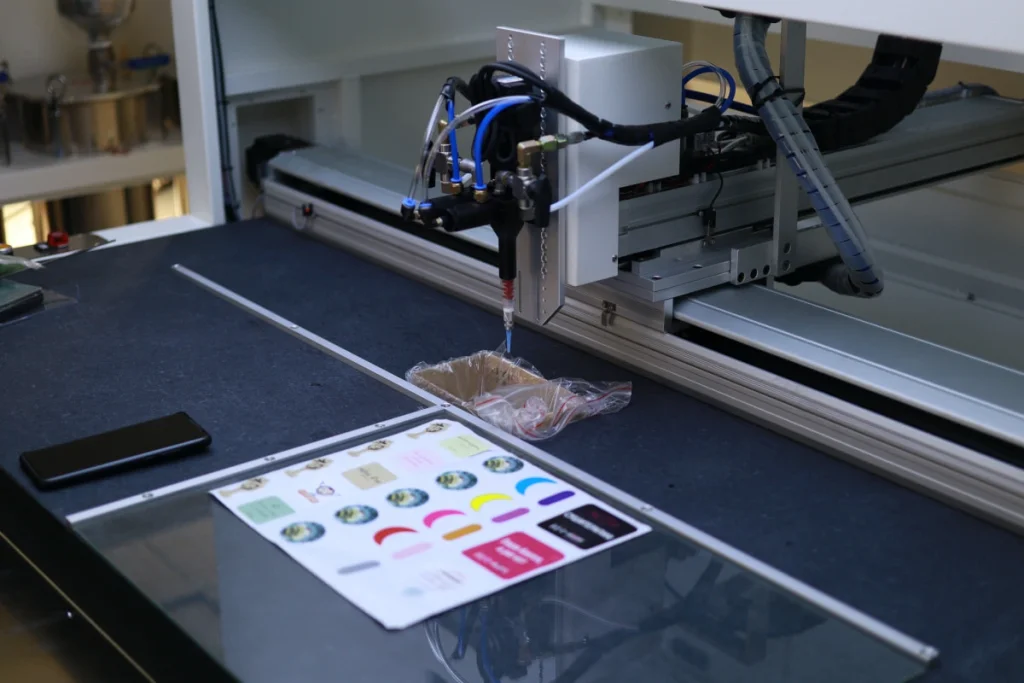
A CCD vision doming machine uses camera recognition to align a dispensing path to the real product or printed reference. Robota SJ4060 also supports on-screen path creation and editing for irregular labels. See the 3-axis automatic doming machine and PJ180 semi-auto pages for their separate workflows.
What CCD Vision Adds to Resin Doming
A standard 3-axis machine follows programmed coordinates. A CCD vision system adds camera recognition so the machine can align a path with the real product position or printed reference. DJ771 uses a handheld teach pendant for path setup; SJ4060 lets operators draw and adjust irregular-label paths on screen. That can make setup and changeovers more convenient for irregular designs, but it does not promise a fixed speed gain or automatically generate a validated path. Recognition and dispensing still need practical sample checks.
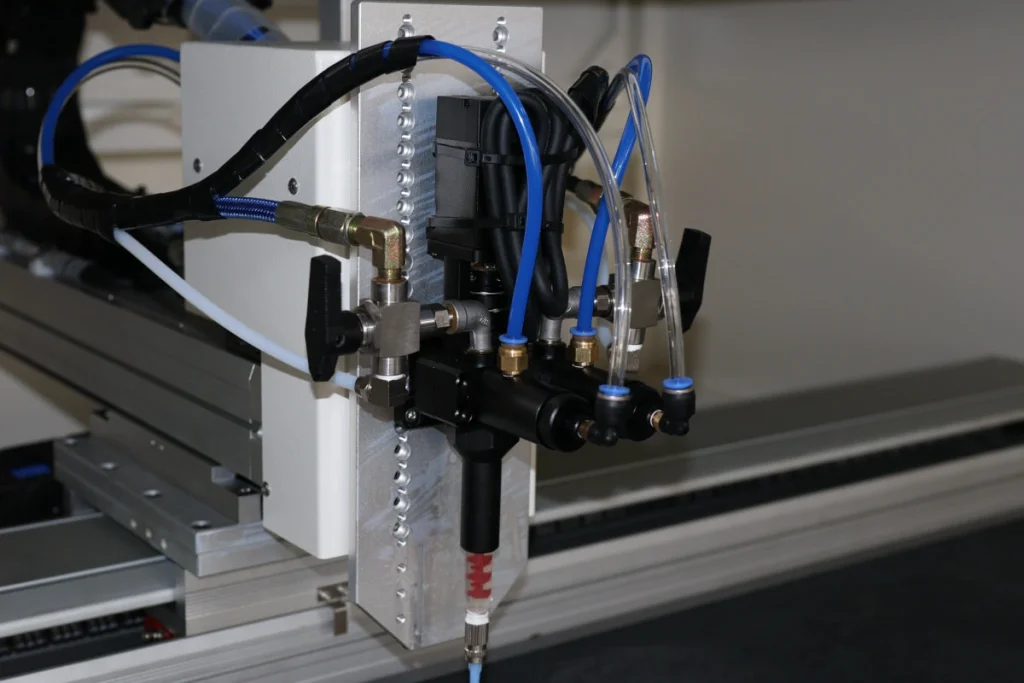
CCD does not replace resin testing. Bubbles, curing, yellowing, edge overflow, adhesion and dome height still depend on resin type, viscosity, material surface and production conditions. CCD mainly reduces positioning risk.
When CCD Is Worth Considering
- Placement or print-position variation: the camera can be evaluated against real references, contrast, reflection and fixture control.
- Frequent irregular-design changes: compare whether on-screen path creation and editing would make setup and changeovers more practical.
- Mixed layouts: check whether positions can be controlled and paths reused before deciding that recognition is required.
- Premium products: validate both positioning and resin results when misplaced dispensing would make scrap costly.
When CCD Is Not the Best First Choice
Do not choose by automation level alone or expect vision to solve resin defects. Validate recognition, path setup and dispensing results on the actual sample before committing to a configuration.
Choosing CCD only because it is advanced
If fixtures already control position and visual path work would not reduce setup effort, CCD may add cost without solving a real production constraint.
Expecting CCD to fix resin problems
Camera alignment cannot solve bubbles, curing issues, poor adhesion, yellowing or wrong resin selection.
Using CCD before the product is stable
If material, artwork, dome height and resin are still changing, sample testing should come before expensive automation.
What to Check Before Choosing CCD
Before choosing a CCD vision system, confirm whether the defect is truly caused by position variation. If resin overflow, bubbles or curing defects appear even on well-positioned samples, the issue may be resin setup rather than camera alignment.
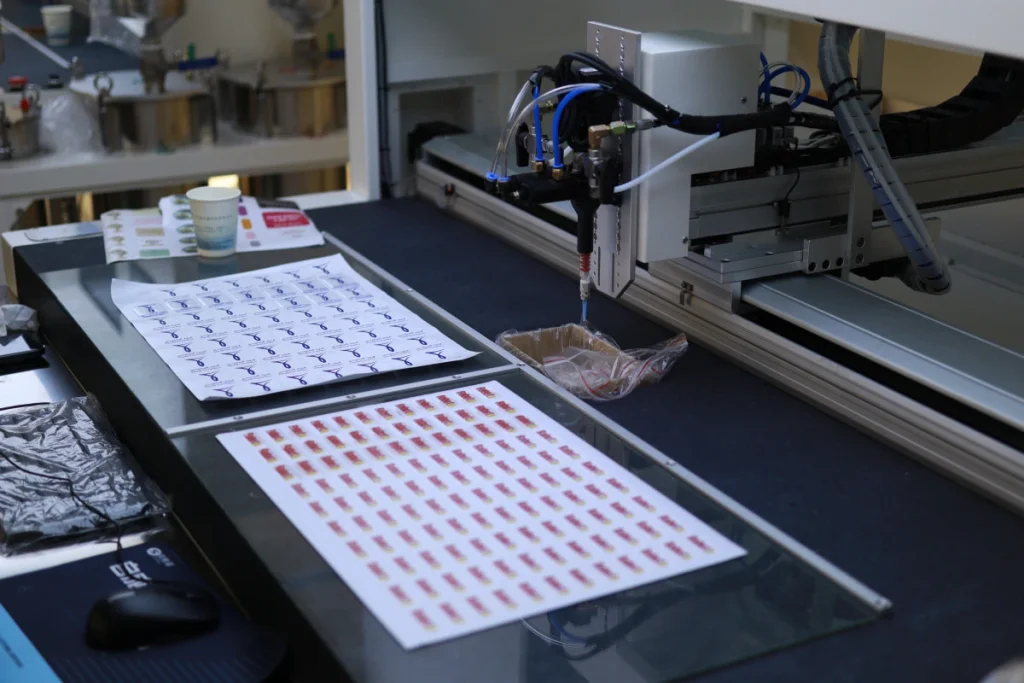
- Send real sheet photos. Show whether layouts are regular, mixed, cut, punched or freely placed.
- Provide artwork files. Camera recognition depends on printed edges, contrast, marks or visible reference points; use the real design to review visual path setup and edits as well.
- Confirm product size and sheet size. Working area and camera recognition area must match the real production sheet.
- Share current defects. Position error, bubbles, edge overflow and curing problems require different solutions.
- Test resin behavior. CCD can align the path, but resin still needs proper flow, viscosity, curing and adhesion.
CCD and Resin Setup Still Work Together
Camera alignment improves the path, but resin determines whether the dome stays clear, level and stable. Outdoor labels, flexible products, high dome height and premium appearance may require polyurethane resin, heating, vacuum degassing or a different sample test. Review doming resin selection and resin doming troubleshooting if quality problems already appear.
Recognizes actual product position and adjusts the dispensing path when placement variation creates scrap risk.
Viscosity, flow, bubbles, curing and edge control still depend on the resin and production conditions.
Fixtures, substrate flatness and surface preparation still determine whether the product remains stable during dispensing.
Recommended Next Pages
- CCD Camera Automatic Doming Machine – product details for high positioning-risk production.
- 3-Axis Automatic Resin Doming Machine Buying Guide – when stable sheets can use saved-path automation.
- How to Choose the Right Sticker Doming Machine – broader machine-selection logic.
- Domed Decals Application Guide – a practical CCD use case when placement or print shift matters.
FAQ
Is CCD vision better than a 3-axis doming machine?
No. CCD does not automatically improve output or resin quality. Compare the actual sample, scrap risk and setup workload before choosing a workflow.
Can CCD vision solve air bubbles or curing problems?
No. CCD mainly helps with positioning. Bubbles, curing, yellowing and adhesion depend on resin setup, mixing, degassing, temperature and material surface.
What products are good candidates for CCD doming?
Printed decals, labels and nameplates with recognizable reference features are candidates for a recognition test. Use actual artwork and surface samples to check contrast and reflections.
Do I need CCD if my sheet layout is regular?
Not always. A controlled regular sheet can suit a saved path; separately assess whether changeover and path-editing work justify evaluating the SJ4060 workflow.
What should I send before asking for a CCD recommendation?
Send sheet photos, artwork files, material, product size, sheet size, target dome height, current defects and monthly production volume.
Should I test samples before buying CCD?
Yes. Sample testing confirms recognition reliability, path setup effort, resin flow, surface adhesion and any combined causes of defects.
Conclusion
Use the sample to verify recognition reliability, path setup effort and resin results before confirming a CCD configuration.