
Process first
Print, cut, clean and test
Good domed stickers start before resin dispensing. Printing, film choice, edge design and surface cleaning affect the final dome.
Resin second
Match epoxy or PU to use conditions
Indoor rigid stickers and outdoor flexible decals may need different resin behavior, even when the dispensing machine is the same.
Machine third
Choose by layout and volume
Small batches, regular sheets and mixed layouts do not need the same automation level. The machine should fit the production pattern.
Quick Answer
To make 3D domed stickers, you print and cut the sticker sheet, prepare a clean surface, dispense a measured layer of clear epoxy or polyurethane resin, let the resin flow to the edge, then cure it into a raised glossy dome. The process sounds simple, but stable production depends on resin choice, sticker material, sheet layout, dispensing control and curing conditions.
The main decision is not only how to apply resin. You also need to decide whether the product is suitable for resin doming, which resin should be tested, and which machine level fits the layout and order volume.
3D Domed Sticker Production Process
A stable doming process starts before resin dispensing. The printed surface, product layout, resin behavior and curing conditions all affect the final dome.
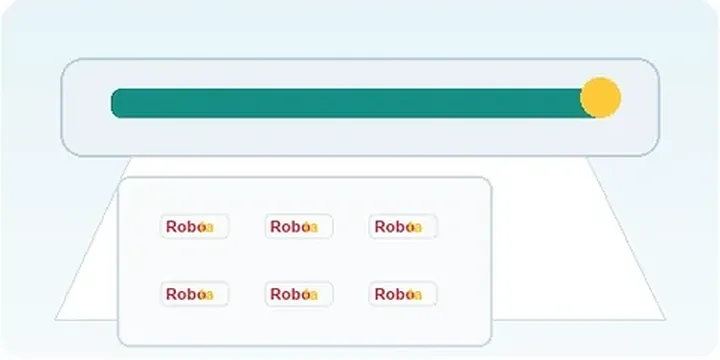
01
Print and Prepare the Sheets
Print the graphics and confirm the substrate, ink and adhesive compatibility.
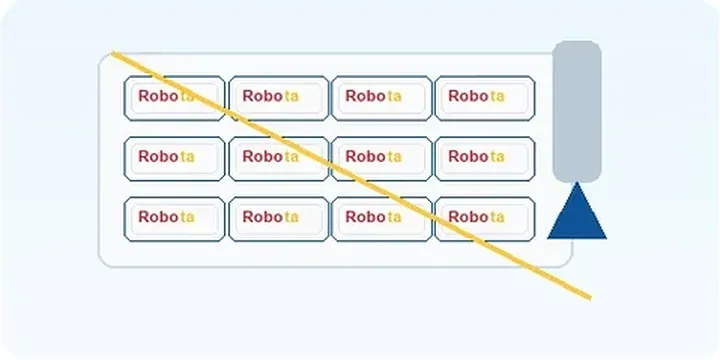
02
Cut the Product Outlines
Cut the sheets before doming and keep sufficient spacing around each product.
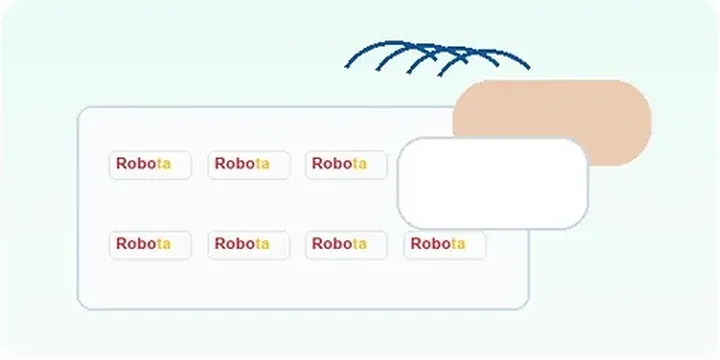
03
Clean and Level the Surface
Remove dust, oil and fingerprints, then place the sheets on a level fixture.
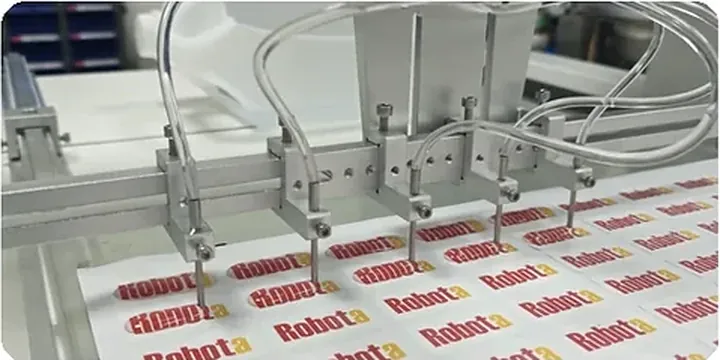
04
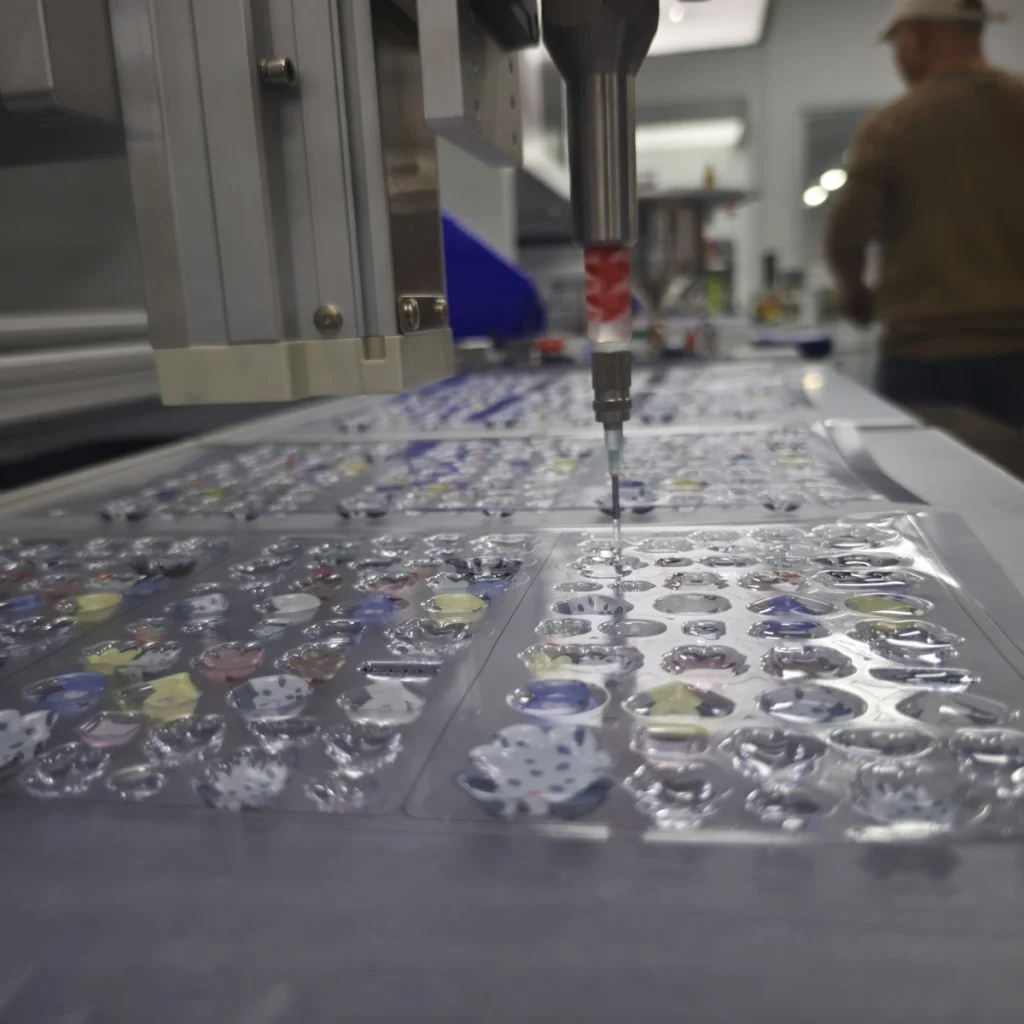
Dispense the Resin
Use single-head or multi-head dispensing according to product spacing and layout.
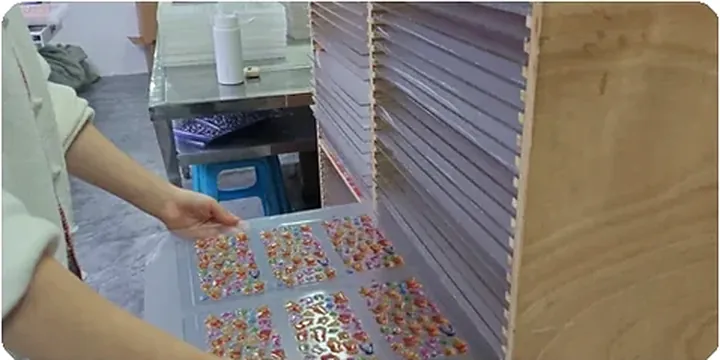
05
Cure Under Controlled Conditions
Keep the sheets level and follow the selected resin TDS for curing conditions.
06
Inspect the Finished Products
Check bubbles, edge control, dome height, curing condition and surface appearance.
Process note: Resin type, temperature, humidity, product size and dome height can change the required dispensing and curing settings. Confirm the final process with the resin TDS and real sample testing.
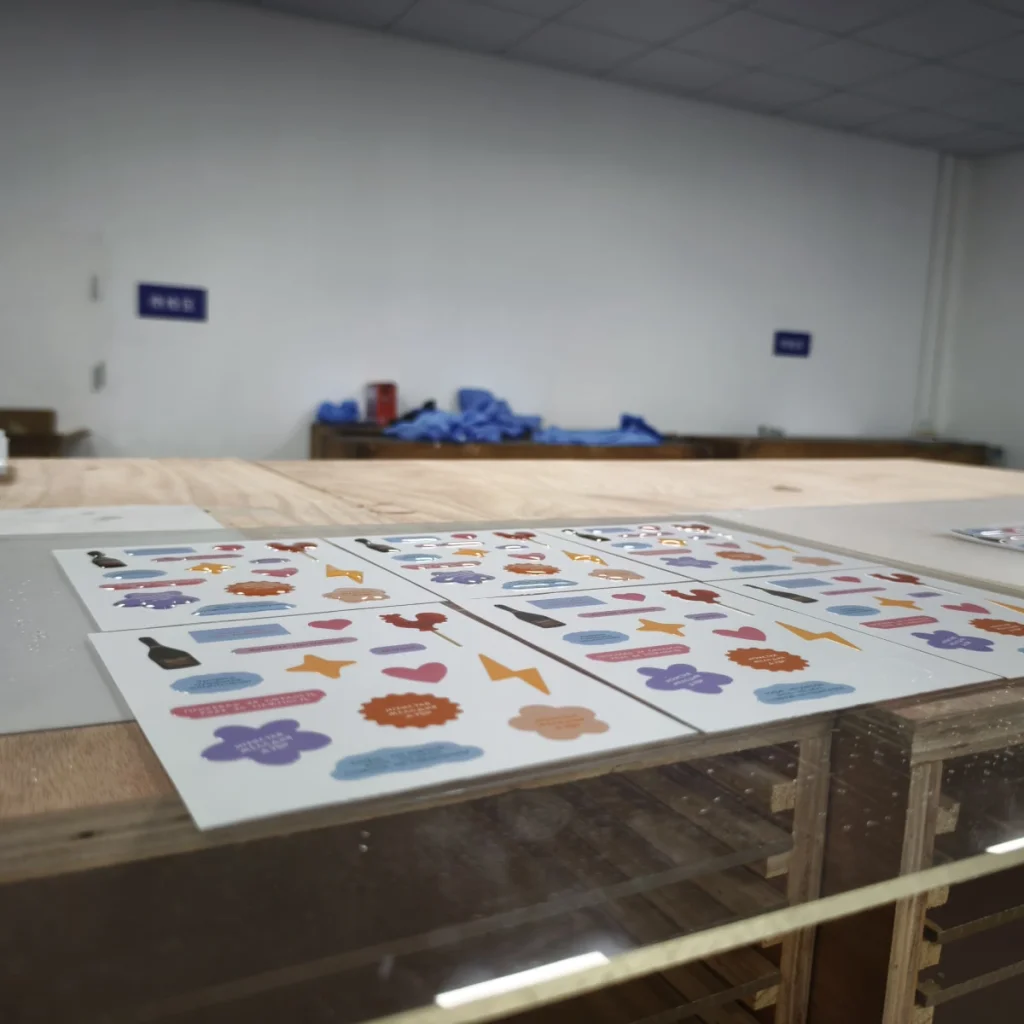
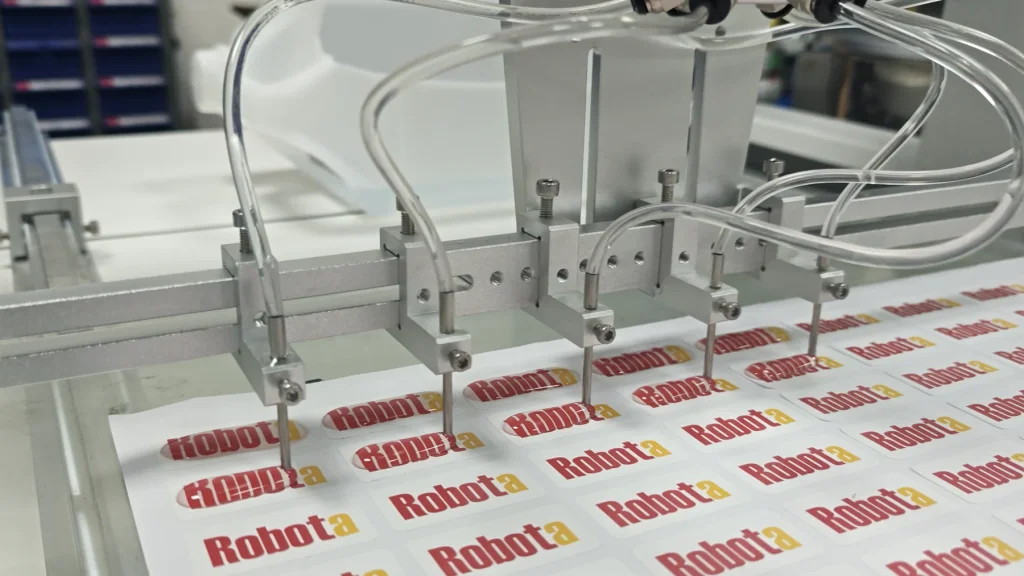
Real production reference: These examples show the same process at production scale: sheets are checked before dispensing, then resin is applied on a stable prepared layout.
What Makes a Sticker Suitable for Doming
Not every sticker becomes a good domed sticker. Resin needs a clean edge, suitable surface tension and enough product spacing so it can form a raised lens without overflowing into the next piece.
- Clear edge boundary: the printed sticker should have a defined edge or cut line that helps the resin stop.
- Stable surface: films, inks and laminates should allow resin to wet the surface without fisheyes, haze or poor adhesion.
- Enough spacing: products arranged too close together increase bridging and overflow risk.
- Reasonable dome height: most domed stickers need a controlled raised surface, not the highest possible resin layer.
- Known use environment: indoor branding stickers, outdoor decals and flexible labels should not be tested with the same assumptions.
If you are planning a specific product type, compare the application guides for domed decals, domed industrial labels, domed nameplates and automotive emblems.
Choose the Resin Before You Scale Production
The resin is not just a clear coating. It decides how the finished dome feels, ages and survives in real use. Epoxy resin is often easier for indoor, rigid and standard products. Polyurethane resin is often considered for outdoor, flexible or UV-exposed products. The final choice should be confirmed with real samples.
Epoxy resin
Good starting point for indoor rigid stickers
Use it when the product needs a clear glossy dome and the main risks are production stability, cost and ease of processing.
PU resin
Worth testing for outdoor or flexible products
Use it when sunlight exposure, bending, soft films or outdoor durability are more important than the simplest process window.
Sample test
Required when the surface is unknown
Different inks, films, coatings and laminates can change wetting, adhesion, clarity and curing results.
For a deeper resin decision, use the doming resin center and the epoxy vs polyurethane doming resin guide. If defects already appear during testing, check the resin doming troubleshooting guide.
Choose the Machine by Production Pattern
The machine should match how your stickers are arranged and how often the job repeats. A more advanced machine is not automatically the better choice if the product layout does not require it.
PJ180 semi-auto
Samples and changing products
Best when product types change often, orders are small, or you still need to confirm resin, dome height and basic process stability.
3-axis automatic
Regular sheets and repeat orders
Best when sticker layouts are stable, product spacing is consistent and saved dispensing paths can repeat across batches.
CCD vision
Mixed layouts and positioning risk
Best when product or print positions vary beyond practical fixture control, or frequent design changes make on-screen path editing more useful. Holes or cutouts alone do not require CCD.
If you are not sure which level fits, start with the doming machine selection center. For deeper comparison, read how to choose the right sticker doming machine, the 3-axis automatic buying guide and the CCD vision guide.
Quality Checks Before Bulk Orders
A sample that looks good immediately after dispensing may still fail after curing or use. Before scaling production, check the result from several angles.
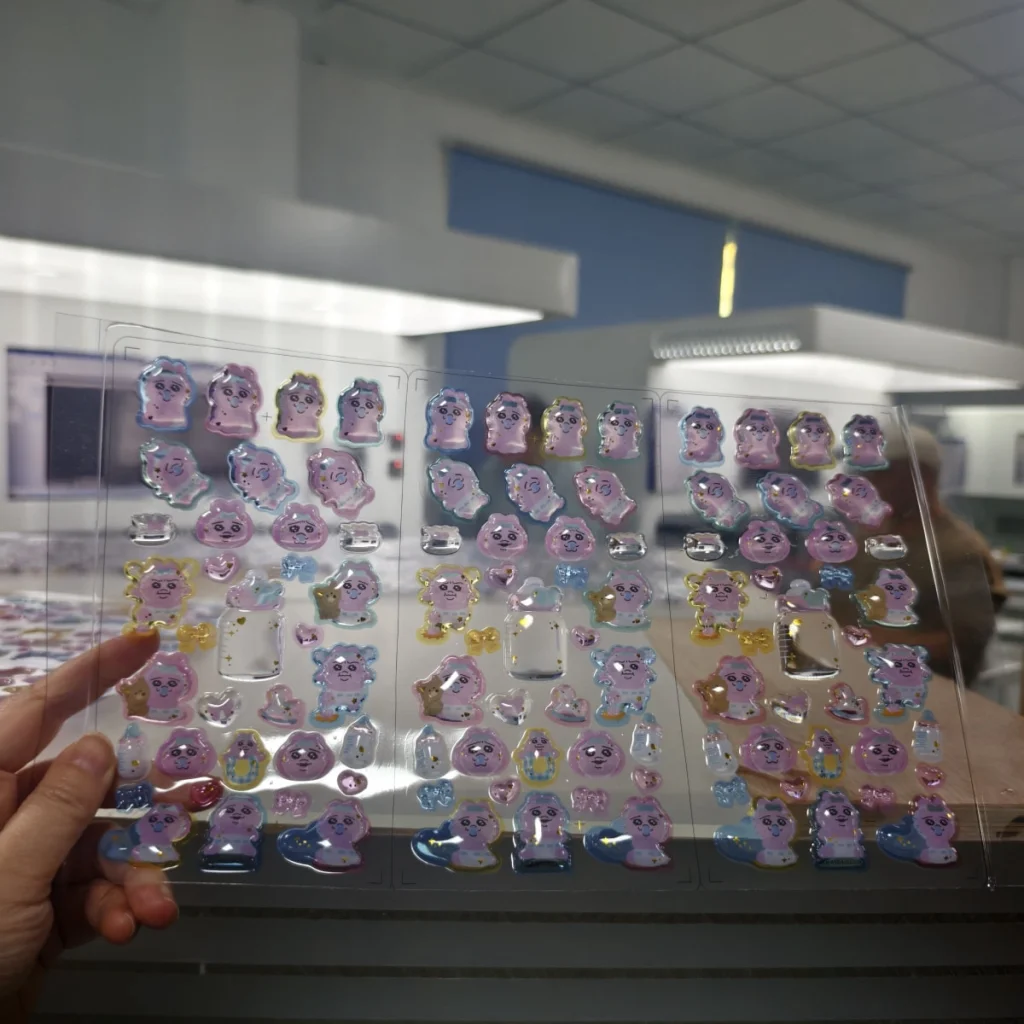
- Bubble control: look for internal bubbles, surface pinholes and air trapped near the edge.
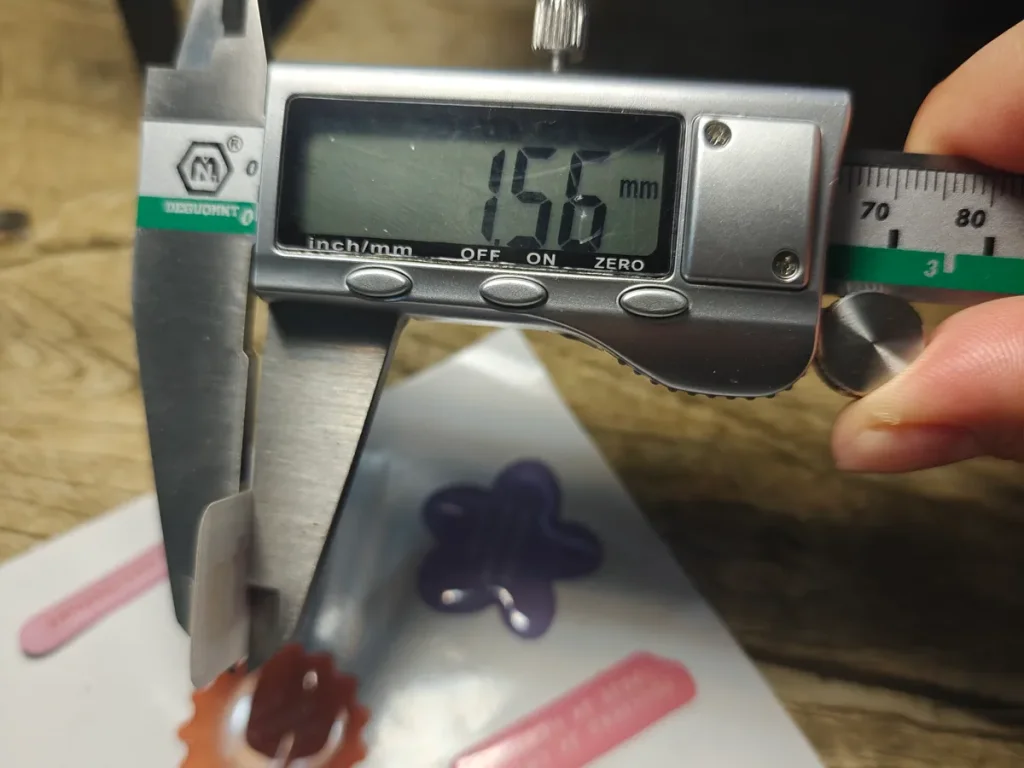
- Dome height: measure whether height is consistent across the sheet and across repeated samples.
- Edge control: confirm resin stops at the edge without overflow, bridging or thin corners.
- Surface finish: check clarity, gloss, haze, fisheyes, orange peel and dust contamination.
- Curing result: confirm the specified cure stage, hardness and flexibility. Investigate unexpected tackiness, softness or brittleness.
- Use testing: check bending, outdoor exposure, handling wear or chemical contact if the product requires it.
These checks are especially important for outdoor decals, industrial labels, automotive emblems and high-value branded products. They reduce the chance that a beautiful sample becomes an unstable production order.
Common Production Mistakes
- Choosing the machine before testing the resin: the machine cannot fully fix yellowing, curing, adhesion or flexibility problems.
- Using one sample to approve the whole process: test more than one product size, material batch and printed surface.
- Ignoring sheet layout: irregular placement can make a normal 3-axis path unreliable, even when the resin is correct.
- Running too fast too early: increasing output before stabilizing volume, curing and edge control usually increases scrap.
- Skipping spare parts planning: worn mixers, nozzles, hoses or heating parts can create inconsistent flow and defects.
For production stability after purchase, the doming machine accessories page explains which parts affect resin flow, downtime and maintenance.
FAQ
Can I make 3D domed stickers by hand?
You can make a few samples by hand, but stable production is difficult because resin volume, path control and dome height depend heavily on the operator. A semi-auto machine is usually a better starting point for small batches and sample testing.
Do I need epoxy resin or polyurethane resin?
Indoor rigid stickers often start with epoxy resin. Outdoor, flexible or UV-exposed stickers often need polyurethane resin testing. The safest answer depends on the product material, use environment and sample result.
What machine is best for regular sticker sheets?
A 3-axis automatic doming machine is usually suitable when the layout is regular, spacing is stable and repeat orders justify saved dispensing programs. If placement varies or print shift is common, CCD vision may be safer.
Why do my domed stickers have bubbles?
Bubbles can come from resin mixing, moisture, trapped air, surface contamination, nozzle setup or curing conditions. Check resin handling and surface preparation before assuming the machine speed is the only problem.
Should I test samples before buying a machine?
Yes, especially if the material, resin type, dome height or use environment is not confirmed. Sample testing helps decide machine type, resin setup, accessories and production settings before a larger investment.
Final Production Logic
Making 3D domed stickers is a process decision, not just a machine purchase. First confirm whether the sticker material and layout are suitable for doming. Then test epoxy or polyurethane resin based on the use environment. After that, choose semi-auto, 3-axis or CCD equipment based on volume, layout stability and positioning risk. This sequence gives you a better chance of stable production than choosing the machine by price or automation level alone.