
1
View Application Guide →Explore common resin doming applications and choose the right machine, resin and sample testing process for your products.
| Application | Layout / Surface to Confirm | Use Environment | Key Purchase Check | Guide |
|---|---|---|---|---|
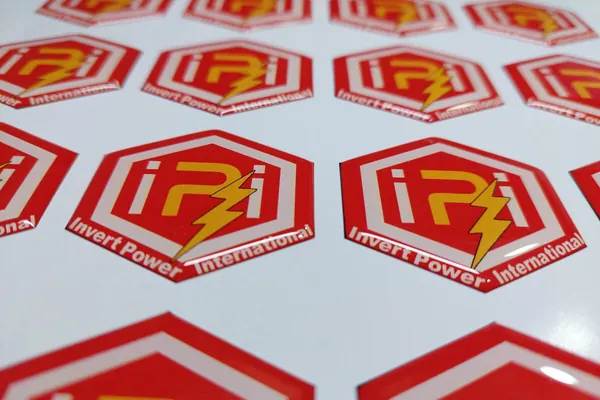
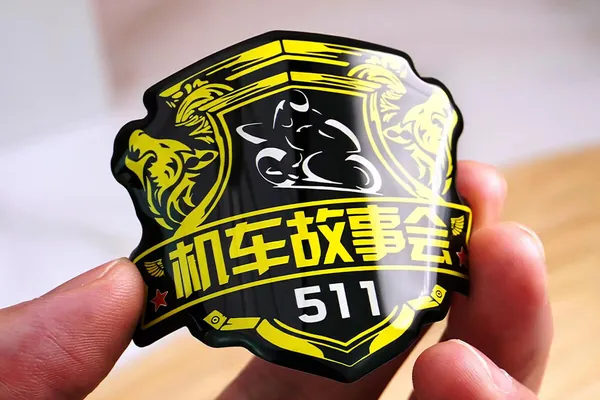
| Domed Decals | Regular sheets, mixed designs, print shift, holes or cutouts | Indoor branding, outdoor decals or flexible products | Confirm whether placement repeats; holes or cutouts alone do not require CCD. | View guide |
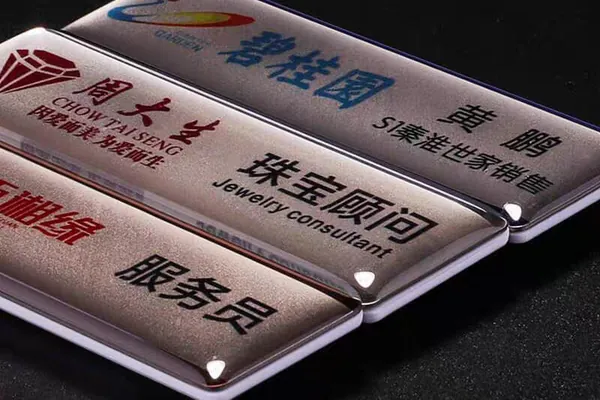
| Domed Nameplates | Metal, plastic or film surface; holes, cutouts and surface finish | Indoor equipment, appliances or outdoor machinery | Test surface adhesion, fixture stability and edge design on the finished substrate. | View guide |
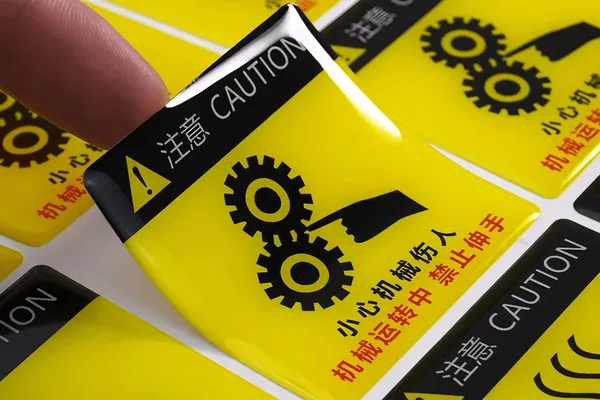
| Domed Industrial Labels | Label edge, control-panel layout, printed reference and overlay flatness | Handling, chemicals, heat, UV or outdoor exposure | Confirm readability, adhesion and environmental resistance on a complete printed sample. | View guide |
| Automotive Emblems | Flat or curved mounting surface, free placement and fixture method | Outdoor UV, temperature changes, washing and impact | Test curvature, adhesion and aging; polyurethane is a candidate, not an automatic answer. | View guide |
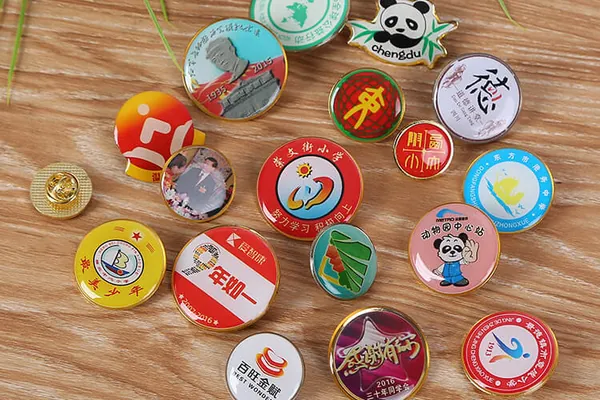
| Domed Badges | Individual pieces or fixture sheets; metal finish, pins and raised edges | Indoor wear, outdoor exposure or frequent handling | Confirm surface treatment, resin hardness or flexibility and fixture repeatability. | View guide |
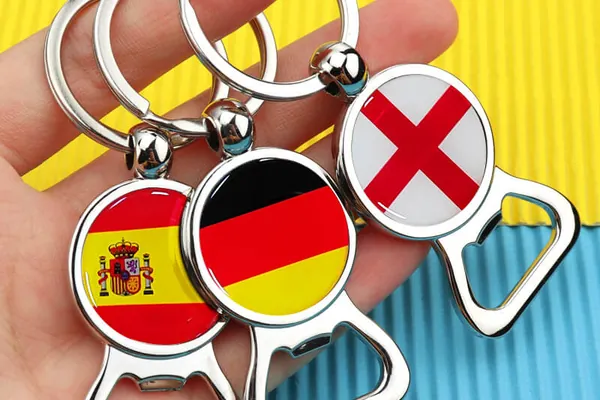
| Domed Keychains | Acrylic, metal or PVC parts; individual loading or repeat fixtures | Frequent handling, impact, bending or outdoor use | Check edge distance, adhesion, impact behavior and whether manual loading limits output. | View guide |
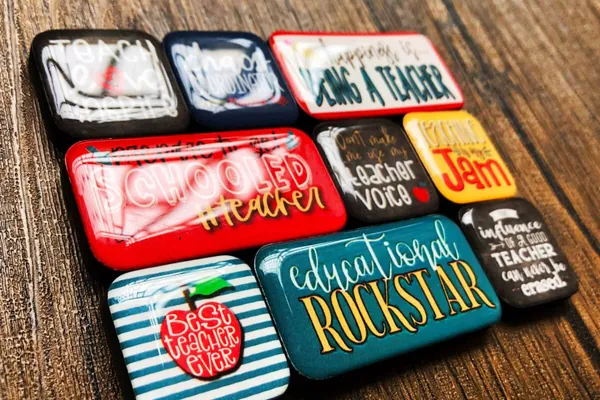
| Promotional Products | Changing shapes, mixed batches, tokens, gifts and branded inserts | Depends on material, handling and campaign use | Confirm changeover time, layout variation and sample quality before choosing automation. | View guide |
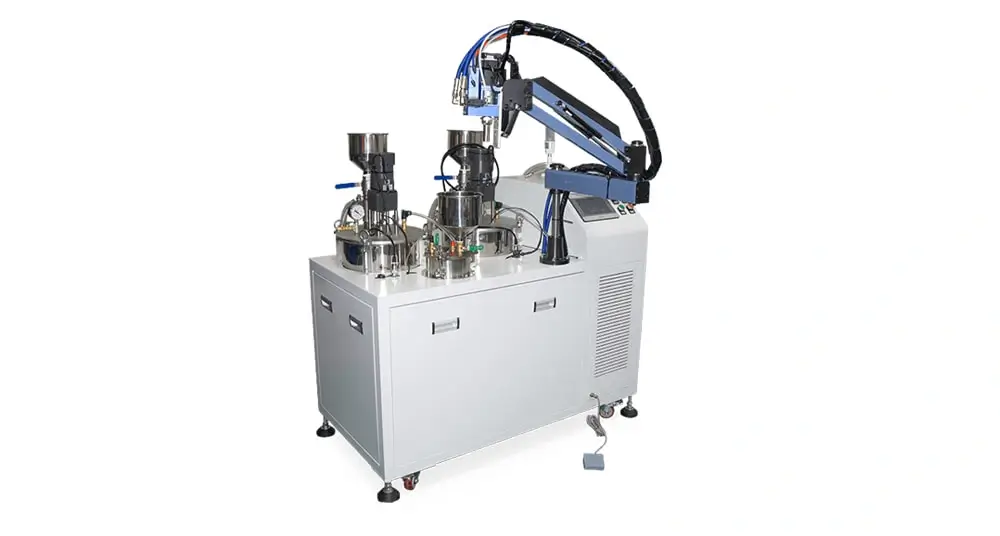
Start with semi-auto when: samples and changing small batches need flexible manual control and lower initial investment; output still depends on operator rhythm.
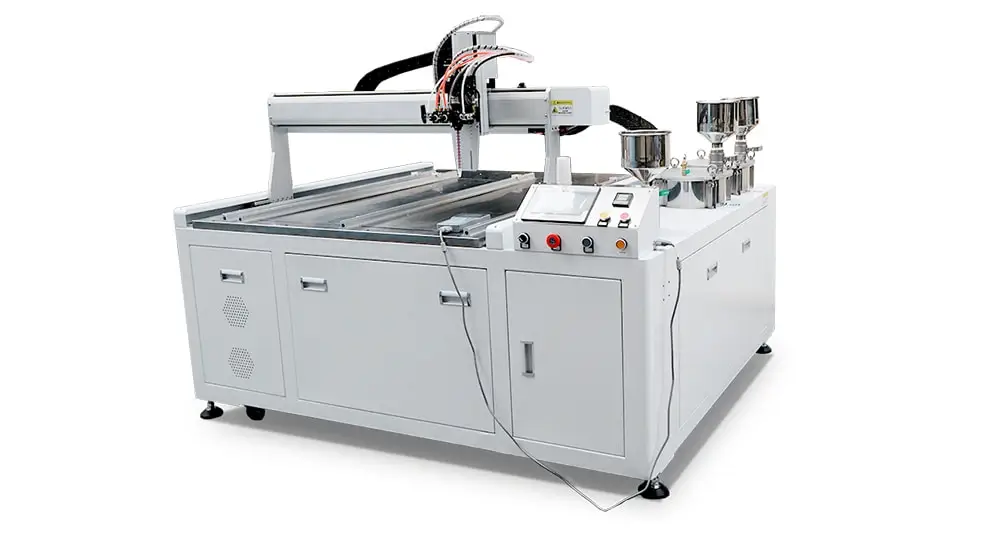
Start with 3-axis when: a saved path and fixtures can position repeat layouts reliably. Desktop platforms suit limited space or budget; DJ771 suits larger regular sheets. Complex outlines or holes alone do not require CCD.
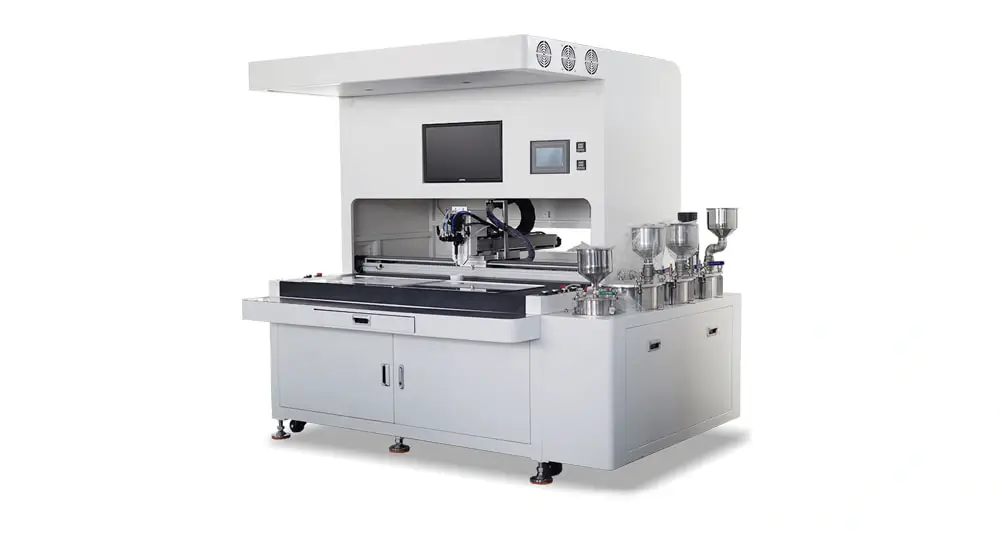
Compare CCD when: measured placement variation needs recognition and correction, or on-screen path creation and editing make irregular-design changeovers more practical. Recognition must pass a sample test, especially where fixtures cannot control variation.
Use one focused page for the question you still need to answer.
Compare PJ180 semi-auto, desktop or floor-standing 3-axis, and CCD by layout, volume, space and positioning risk.
Compare resin by material, flexibility, use environment, dome behavior and real sample testing.
Use the workflow below to send the product details needed for machine, resin and process validation.
Share product photos, size, material, target dome height, quantity and indoor or outdoor use.
We test the resin type, dispensing path, dome height, curing behavior and edge stability.
You receive sample photos or videos to check gloss, clarity, surface quality and final appearance.
We recommend the suitable machine, resin, accessories and process parameters for production.
Clear sample information helps us test faster and recommend the right configuration more accurately.
Quick Answer To prepare printed labels before resin doming, qualify the complete label construction—face stock,…
Quick Answer Resin doming cure time, temperature, and humidity limits are formulation-specific; there is no…
Quick Answer A resin doming production line should be specified as a connected process, not…
Quick Answer Single-head and multi-head resin doming describe how many dispensing needles apply resin at…
Quick Answer A doming machine sample test is a controlled pre-purchase trial used to check…
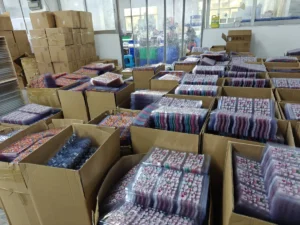
Quick Answer Resin doming production output cannot be estimated from the machine model or dispensing…
Start with the application card and its guide, then use the selection table to check the product surface, layout and intended environment. The category identifies the relevant product checks; the final machine and resin still depend on a complete sample and the production workflow.
Yes. One machine can handle different applications when the dispensing path, fixture, resin type and dome height are adjusted for each product. Check the finished product and changeover requirements whenever the material, layout or target dome changes.
Compare operator workload, setup effort for each design and the cost of a validated configuration. The Product Center provides the full machine comparison. Product shape or order volume alone does not decide the machine; test the actual production workflow.
Epoxy is a practical starting point for many indoor applications; clarity, hardness and scratch resistance depend on the formulation. Test a suitable polyurethane formulation when flexibility, impact or outdoor exposure matters. Curvature alone does not decide the resin. Confirm the final choice on the actual substrate, print or coating, edge design and cure conditions.
Sample testing is strongly recommended, especially for new products or outdoor applications. Testing helps confirm resin compatibility, dome height, edge control, curing behavior, bubble control and final appearance. You can send product photos, design files or physical samples, and we will provide a machine + resin recommendation based on the test result.